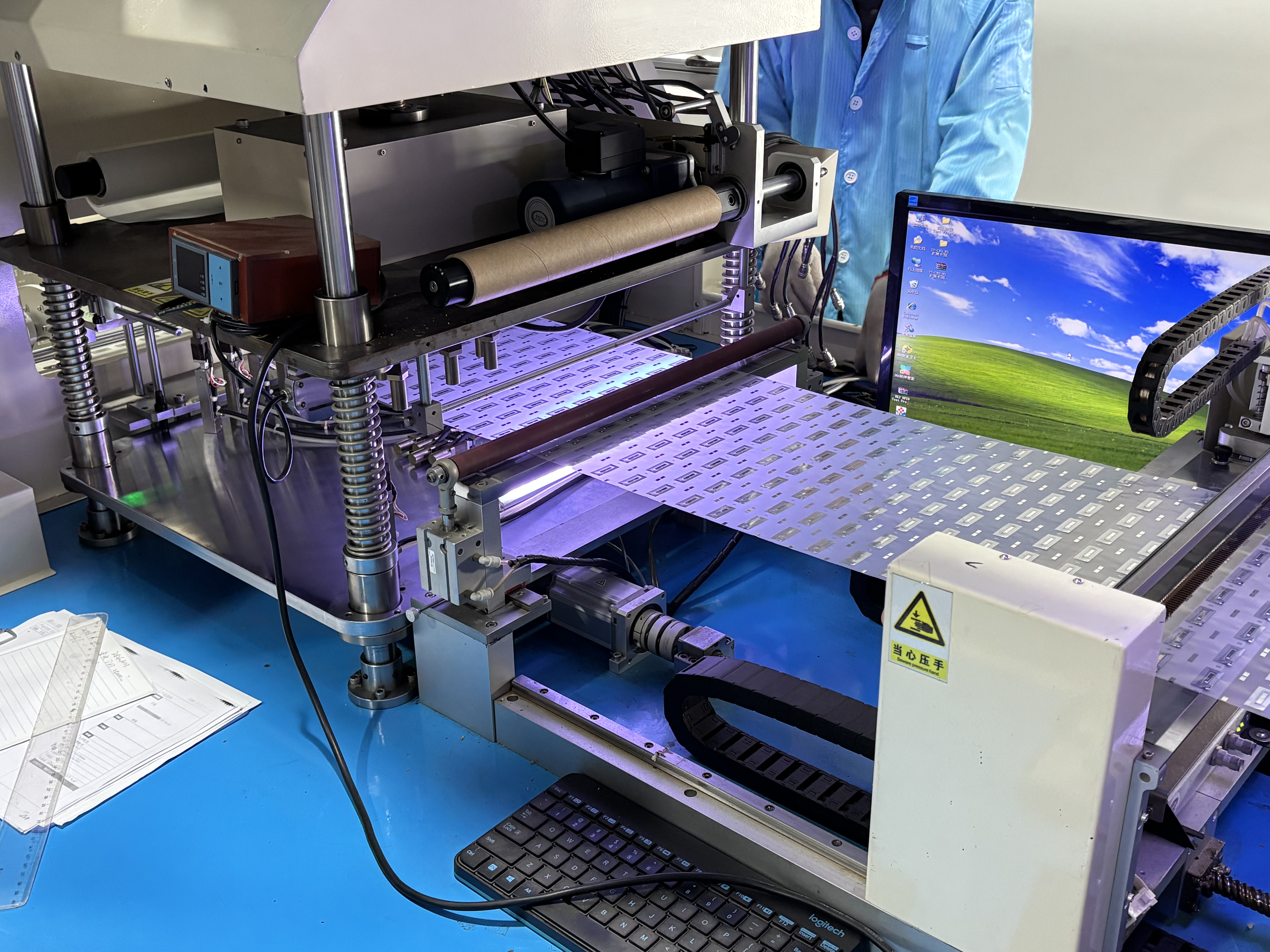
RFID Employee ID Cards: 125kHz vs. 13.56MHz Guide


RFID Employee ID Cards Explained: 125kHz vs. 13.56MHz for Access Control and Attendance
——————
What Is an RFID Employee ID Card?
An RFID employee ID card is a contactless identification card that uses Radio Frequency Identification (RFID) technology to identify employees and communicate with compatible readers. It is widely used in offices, factories, warehouses, schools, and other workplaces where employee identification and access management are important.
Unlike traditional identification cards that only display printed information, RFID employee cards contain an embedded chip and an antenna. When the card is presented near a compatible RFID reader, the reader communicates with the card to identify the credential and process the relevant information.
Depending on the system configuration, RFID employee cards can support:
Access Control: Manage entry to offices, buildings, laboratories, and restricted areas.
Time Attendance: Record employee clock-in and clock-out events.
Employee Identification: Combine employee photos, names, ID numbers, and company logos on one card.
Workplace Management: Support staff identification and other compatible employee management systems.
Multi-Area Access: Help organizations manage access permissions for different departments or facilities.
RFID employee ID cards provide a convenient way to combine physical identification with electronic access credentials, helping businesses streamline daily operations.

How Do RFID Employee Attendance Cards Work?
RFID employee attendance cards generally operate through contactless communication between a card and an RFID reader.
The process is straightforward:
Step 1: Present the Card
An employee holds their RFID card near an attendance terminal or access control reader.
Step 2: Communicate with the Reader
The reader generates a radio-frequency field. If the card uses a compatible technology, its chip can communicate with the reader.
Step 3: Identify the Card
The system reads the card's supported identification data or other permitted information, depending on the chip and system configuration.
Step 4: Verify Permissions or Record Attendance
The connected system checks the credential and applies the relevant rules. It may unlock a door for an authorized employee or record an attendance event.
Step 5: Store and Manage Records
The access control or attendance software processes the event according to its configuration.
It is important to understand that an RFID card does not independently determine whether an employee is authorized to enter a room. Access permissions are generally managed by the connected access control system.
The security level also depends on the selected chip, authentication method, reader, and system design.
What Is the Difference Between 125kHz and 13.56MHz RFID Cards?
Two commonly used frequencies in employee identification and access control are 125kHz and 13.56MHz. Both support contactless identification, but they use different RFID technologies and are not automatically interchangeable.
125kHz RFID Cards
125kHz cards use low-frequency (LF) RFID technology. They are widely used in traditional proximity access control systems, including door entry systems and employee attendance terminals.
Common characteristics include:
Compatibility with supported 125kHz proximity readers.
Use in many established access control installations.
Contactless employee identification.
Availability of chip options such as TK4100 and compatible EM-series products, depending on the required system.
125kHz cards can be a practical choice when an organization already operates a compatible low-frequency access control system and wants to maintain its existing infrastructure.
13.56MHz RFID Cards
13.56MHz cards use high-frequency (HF) RFID technology. They are commonly used in smart cards, contactless identification, and various access control applications.
Depending on the selected chip and system, features may include:
Support for compatible smart card readers.
Different memory and authentication capabilities.
Integration with supported employee identification systems.
Potential use in other compatible contactless applications.
Chip families such as MIFARE and NTAG operate at 13.56MHz, but their capabilities and intended applications vary. Not every 13.56MHz card supports every reader or application.

125kHz vs. 13.56MHz: A Quick Comparison
Feature | 125kHz RFID | 13.56MHz RFID |
|---|---|---|
Frequency band | Low frequency (LF) | High frequency (HF) |
Common applications | Proximity access control and attendance | Smart access control and contactless identification |
Typical chip options | TK4100 and compatible EM-series chips | MIFARE, NTAG and other compatible HF chips |
Reader compatibility | Requires a compatible 125kHz reader | Requires a compatible 13.56MHz reader |
Security capabilities | Depend on the chip and system | Depend on the chip, authentication and system |
Suitable for | Compatible existing LF installations | Compatible HF smart card systems |
Important: A card's frequency alone does not determine its security, read range, or overall performance. The chip model, reader, antenna design, and access control system all affect the result.
What Is a Dual-Frequency RFID Employee ID Card?
A dual-frequency RFID employee ID card is designed to combine two RFID technologies in one physical card. For example, a card may integrate both 125kHz LF and 13.56MHz HF functionality.
This configuration can be useful for organizations that operate different access control systems across multiple buildings, departments, or facilities.
Key Advantages of Dual-Frequency Cards
1. One Physical Card for Different Systems
Where the card and readers are properly configured, one card can provide credentials for two compatible RFID systems.
2. Greater Flexibility
Organizations with mixed access control infrastructure may be able to simplify employee credential management without issuing separate physical cards for each system.
3. Convenient Employee Identification
A dual-frequency card can combine RFID functions with printed employee information, such as a photo, name, department, and employee number.
4. Support for Gradual System Upgrades
Businesses with legacy 125kHz equipment and newer 13.56MHz installations may consider dual-frequency cards as part of a transition plan, subject to compatibility testing.
Does a Dual-Frequency Card Work with Every Reader?
No. Dual-frequency does not mean universal compatibility.
The selected chip configuration must match the readers and access control systems in use. The two RFID technologies may also operate as separate credentials within the same card rather than as one unified credential.
Before ordering, businesses should confirm the reader models, required chip types, authentication methods, and intended applications.

Where Are RFID Employee ID Cards Used?
RFID employee cards are used in many environments where convenient identification and controlled access are required.
Office Buildings and Corporate Facilities
Companies can use RFID cards to manage employee entry to office doors, meeting areas, server rooms, and other restricted spaces. Printed employee information also helps security personnel identify staff members.
Factories and Industrial Facilities
Factories and warehouses often need to manage access to production areas, storage rooms, equipment zones, and staff-only facilities. RFID employee cards can support identification and access control when integrated with compatible systems.
Employee Time Attendance
Compatible RFID cards can be used with attendance terminals to record clock-in and clock-out events. Depending on the software, these records may support shift management, attendance reporting, and workforce administration.
Schools and Educational Institutions
Staff ID cards can support employee identification and access to offices, laboratories, libraries, and other controlled areas. The actual functions depend on the school's card system and reader configuration.
Parking Areas and Restricted Zones
RFID credentials may also be used in compatible parking access systems, equipment rooms, and other restricted areas.
For all these applications, organizations should ensure that the selected card technology matches the installed equipment and the required security level.
How to Choose the Right RFID Employee ID Card
Selecting an employee ID card involves more than choosing a frequency. The card must meet the technical requirements of the access control system while satisfying the organization's identification and customization needs.
1. Confirm the RFID Frequency
Determine whether your existing readers support 125kHz, 13.56MHz, or both. If you are unsure, check the reader documentation or consult the system supplier.
2. Select the Appropriate Chip
Different chip models offer different identification, memory, and authentication capabilities. The right option depends on your system's requirements rather than the frequency alone.
3. Check Card Size and Thickness
The standard CR80 card size is 85.5 × 54 mm, with a typical thickness of 0.76 mm. Other dimensions or thicknesses may be available for specific projects.
4. Consider Material and Durability
PVC is widely used for employee ID cards because it supports full-color printing and is suitable for regular handling. Other materials may be considered according to project requirements.
5. Plan Printing and Personalization
Employee cards can be customized with:
Company logos and brand colors.
Employee photos and names.
Employee ID numbers and department information.
QR codes and barcodes.
Serial numbers and other identification details.
Personalized printing helps organizations maintain a consistent and professional employee identification system.
6. Confirm Encoding Requirements
If the cards require UID information, memory data, or application-specific encoding, confirm the exact requirements before production. Not every chip supports every encoding function.
7. Test Compatibility Before Mass Production
Where possible, test samples using the actual readers and access control software. This helps verify card recognition and required functions before ordering a large quantity.
Custom RFID Employee ID Cards from XINHEBAO
XINHEBAO provides customized RFID employee ID cards for businesses, system integrators, distributors, and organizations seeking employee identification, access control, and attendance solutions.
Our employee ID cards can be configured according to project requirements, with options for RFID technology, card materials, printing, personalization, and encoding.
Available customization options include:
RFID Frequency: 125kHz, 13.56MHz, or a suitable dual-frequency configuration.
Chip Options: Compatible chip models selected according to the required system.
Card Material: PVC, PET, or other available materials depending on the project.
Card Dimensions: Standard CR80 size or customized specifications.
Printing: Company logos, employee photos, names, ID numbers, QR codes, and barcodes.
Surface Finish: Glossy, matte, frosted, or other available finishes.
Data Encoding: UID, memory, or customized data encoding where supported by the selected chip.
Production Services: OEM/ODM customization and bulk production.
Standard specifications include a CR80 card size of 85.5 × 54 mm and a typical thickness of 0.76 mm. Final specifications depend on the selected product configuration.
For organizations planning a new employee card project, providing the reader model, RFID frequency, chip requirements, artwork, and estimated order quantity will help us recommend a suitable solution.

Frequently Asked Questions About RFID Employee ID Cards
Q1: Can one employee ID card support both 125kHz and 13.56MHz?
Yes. Dual-frequency cards can combine 125kHz and 13.56MHz technologies in one physical card. The exact configuration must be compatible with the intended readers and access control systems.
Q2: Are 125kHz and 13.56MHz cards interchangeable?
No, not by default. A reader designed exclusively for one frequency generally cannot read a card that operates only at the other frequency. Always verify compatibility before purchasing replacement cards.
Q3: Can RFID employee cards be customized with employee photos and company logos?
Yes. Employee cards can be personalized with company branding, employee photos, names, ID numbers, department information, QR codes, and other suitable printed details.
Q4: Can RFID employee cards record attendance automatically?
They can support attendance recording when used with a compatible attendance terminal and software system. The system processes the card presentation and records the event according to its configuration.
Q5: Are RFID employee ID cards secure?
Security depends on the selected chip, authentication features, reader, access control software, and overall system design. For sensitive areas, organizations should evaluate the security capabilities of the complete solution rather than relying on RFID frequency alone.
Q6: What information should I provide when requesting a quotation?
Provide the required RFID frequency, chip model or reader information, card size, material, printing design, encoding requirements, and estimated quantity. If you are unsure which chip to select, sharing your existing system information can help identify suitable options.
Conclusion
RFID employee ID cards are an effective option for combining employee identification with contactless access control and time attendance. Understanding the differences between 125kHz and 13.56MHz technologies helps businesses choose cards that match their existing equipment and operational requirements.
For organizations that use multiple RFID systems, a properly configured dual-frequency card may provide additional flexibility. However, chip selection, reader compatibility, and security requirements should always be confirmed before production.
XINHEBAO offers customized RFID employee ID cards with flexible chip, printing, material, and encoding options for different workplace applications.
Looking for customized RFID employee ID cards for your business? Contact XINHEBAO to discuss your requirements and find a suitable card solution for your access control and attendance system.
Related Product: 13.56MHz / 125kHz Employee Attendance ID Card for Access Control