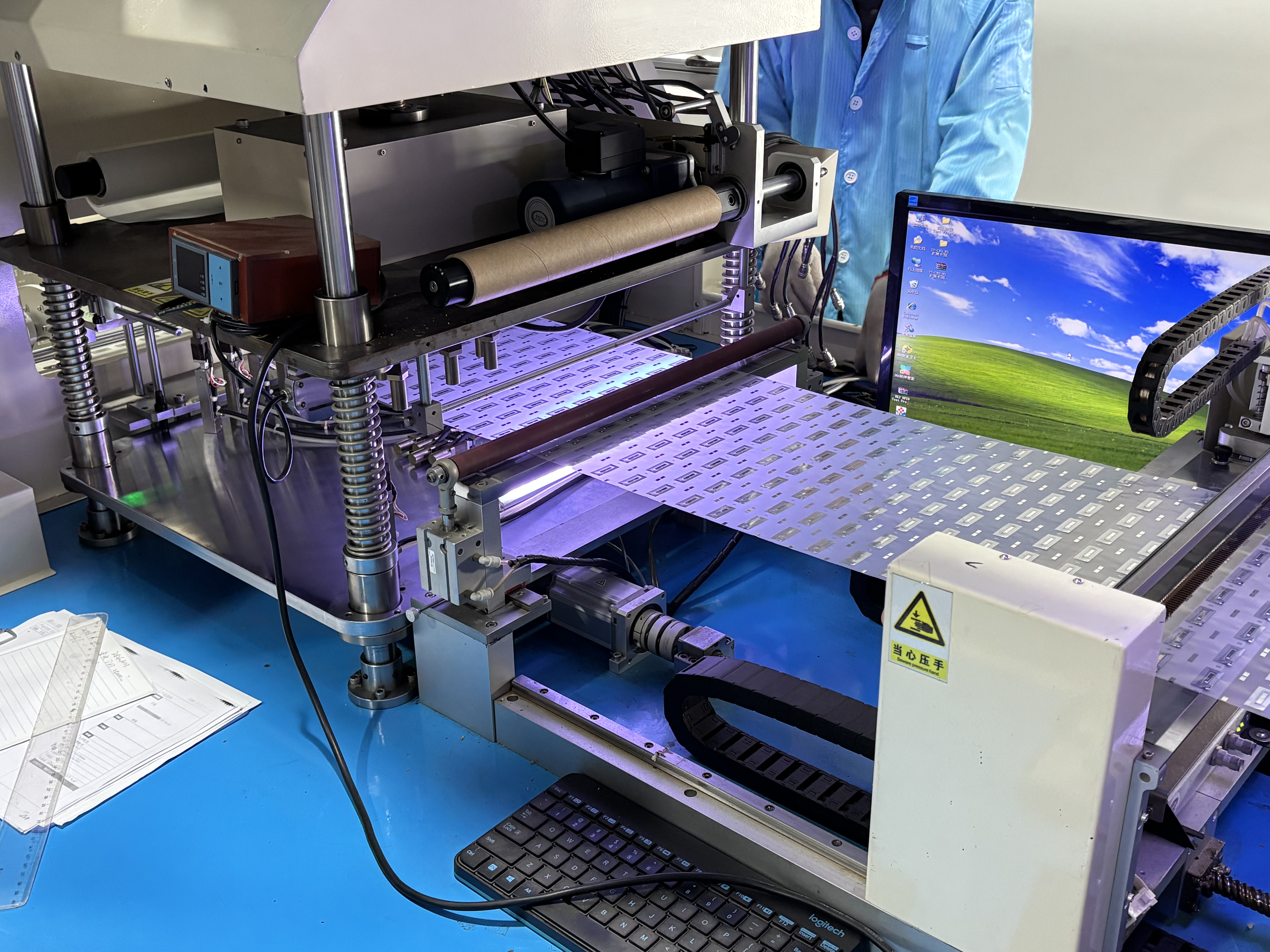
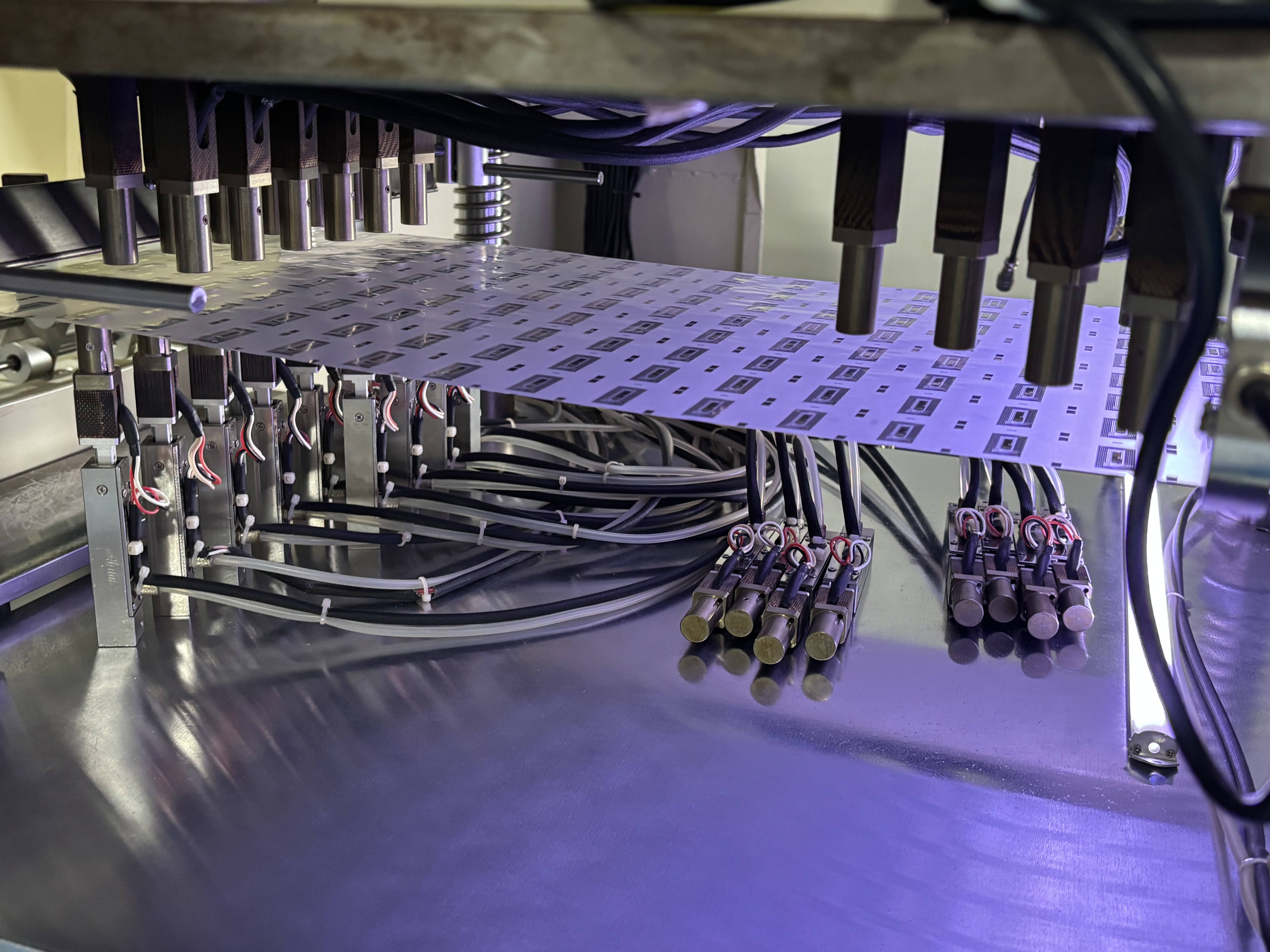
Custom Metal Cards: Materials, Processes & Applications


Custom Metal Cards Explained: Materials, Manufacturing Processes, Benefits and Applications
Introduction
In today's competitive business environment, a business card or membership card is more than just a tool for identification. It can also represent a company's brand image, service quality, and professional identity.
Traditional PVC cards are widely used because they are lightweight, affordable, and easy to customize. However, for businesses looking to create a more distinctive and premium impression, custom metal cards are becoming an attractive alternative.
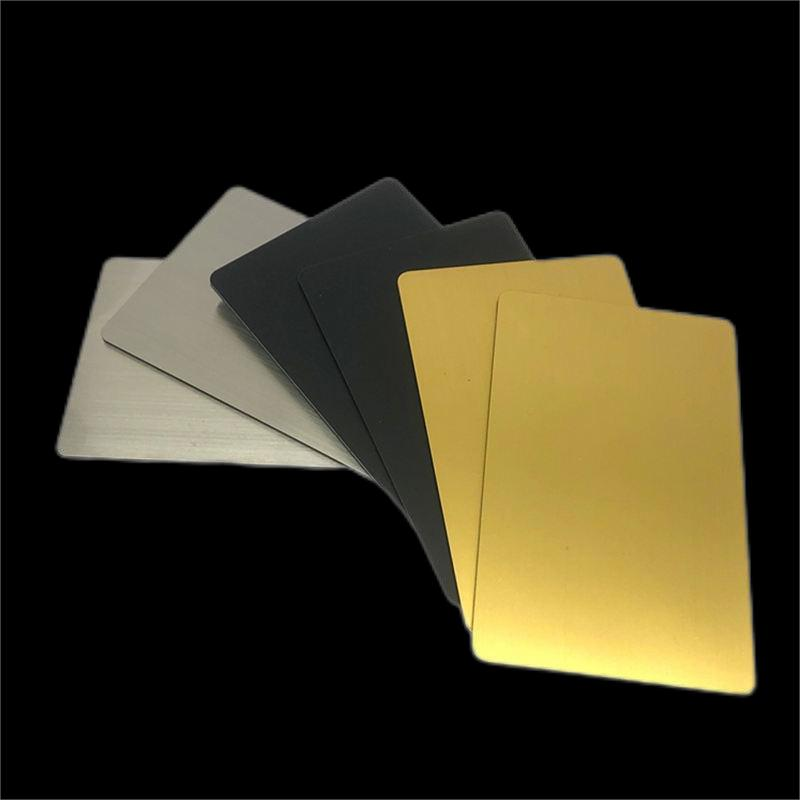
Made from materials such as stainless steel, aluminum, and copper, metal cards combine durability with a distinctive metallic appearance. They are widely used for business cards, VIP membership cards, hotel cards, corporate identification, and luxury brand promotions.
In this article, we will explore what metal cards are, how they are manufactured, their key advantages, and how to choose the right metal card for different applications.

1. What Are Custom Metal Cards?
Custom metal cards are specially manufactured cards made from metal materials instead of conventional PVC or paper substrates.
They are designed to provide a more premium appearance, a solid hand feel, and better resistance to everyday wear.
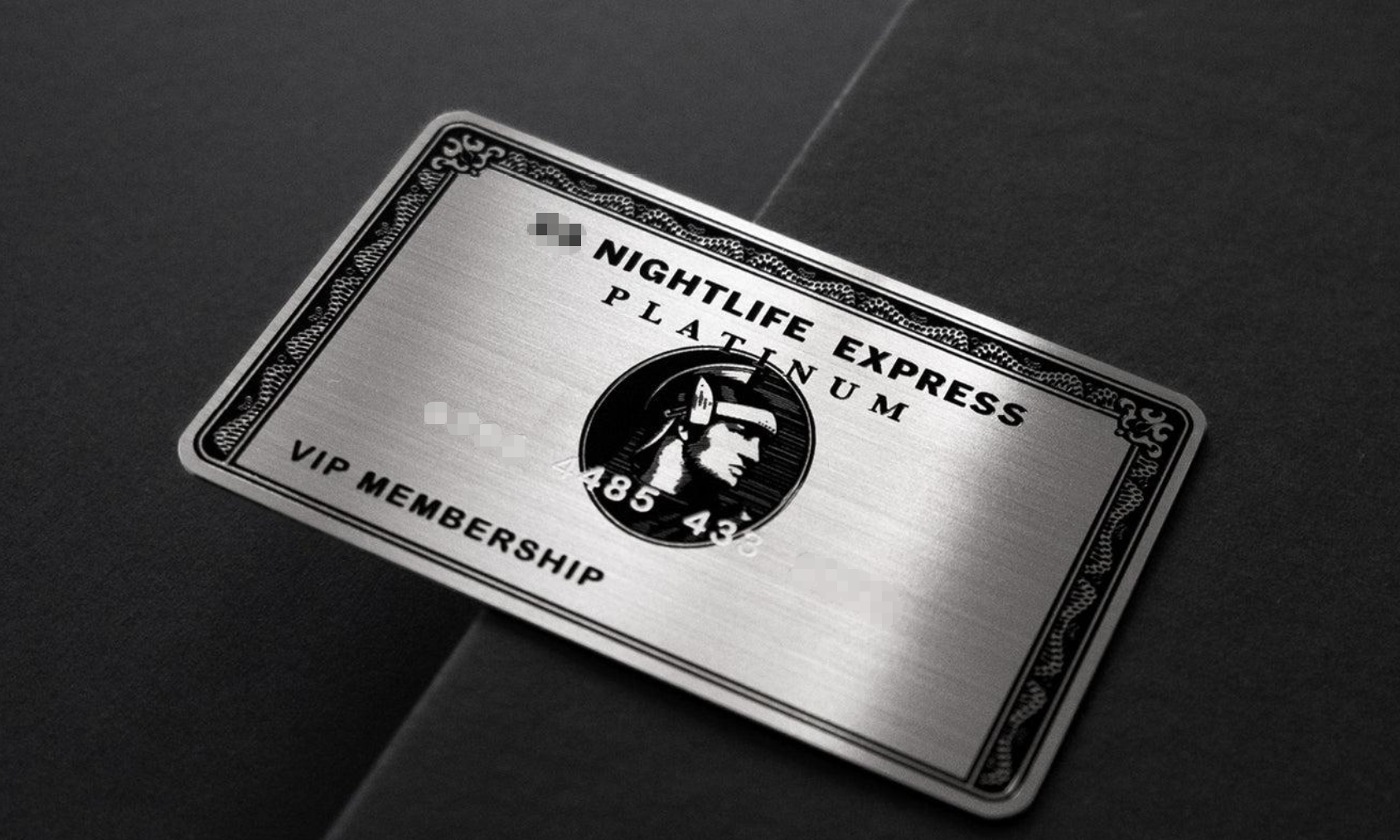
Depending on the application, metal cards can be customized with company logos, names, serial numbers, QR codes, barcodes, and decorative patterns.
Common types include:
Metal Business Cards
Metal ID Cards
Metal Membership Cards
Metal VIP Cards
Luxury Metal Gift Cards
Blank Metal Cards
Custom RFID/NFC Metal Cards
Unlike ordinary plastic cards, metal cards offer a distinctive combination of metallic texture, customized finishing, and long-term brand recognition.
2. Popular Metal Card Manufacturing Processes
Different manufacturing processes create different visual effects and functional characteristics.
Manufacturing Process | Main Features | Typical Applications |
|---|---|---|
Laser Engraving | Permanent markings with precise details | Logos, names, serial numbers |
UV Printing | Full-color graphics and detailed designs | Business cards, promotional cards |
Silk Screen Printing | Suitable for solid colors and graphic elements | Corporate and membership cards |
Hollow Cutting | Creates distinctive openwork patterns | Luxury business cards |
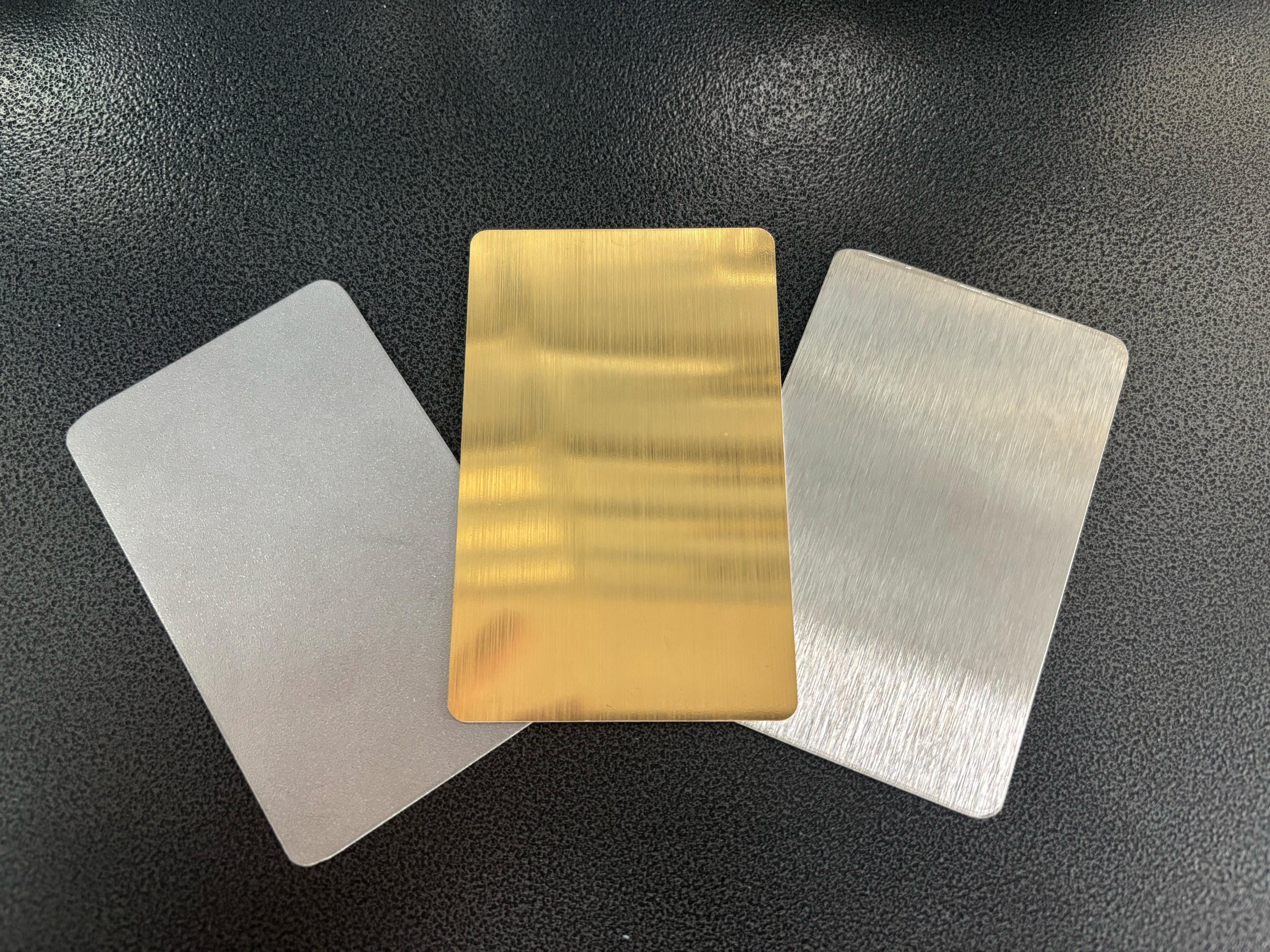
Brushed Finishing | Produces fine directional metallic lines | Premium metal cards |
Mirror Finishing | Creates a smooth reflective surface | Luxury and VIP cards |
Selecting the appropriate process helps achieve the desired balance between appearance, functionality, and production cost.
3. Common Materials Used for Metal Cards
Choosing the right metal material is one of the most important steps in metal card manufacturing. Different materials offer different advantages in terms of appearance, weight, strength, and processing performance.
Stainless Steel
Stainless steel is one of the most popular materials for premium metal cards.
Its main characteristics include:
Excellent corrosion resistance
Strong and durable structure
Premium metallic appearance
Suitable for laser engraving
Available in brushed, polished, and matte finishes
Stainless steel cards are commonly used for luxury business cards, VIP membership cards, and high-end corporate identification.
Aluminum
Aluminum is a lightweight metal material that offers good flexibility in design and processing.
Its advantages include:
Lightweight compared with stainless steel
Good corrosion resistance
Easy to customize with different colors
Suitable for printing and surface treatments
Available in various thicknesses and finishes
Aluminum cards are suitable for business cards, promotional cards, and customized membership cards.
Copper
Copper offers a distinctive metallic appearance and can create an elegant, traditional, or luxurious visual effect.
Its characteristics include:
Unique natural metallic color
Suitable for engraving and decorative processing
Distinctive appearance for premium products
Suitable for customized business and membership cards
The choice of material depends on the desired appearance, budget, card weight, and intended application.
4. How Are Metal Cards Manufactured?
Metal card manufacturing involves several processes to transform raw metal sheets into finished customized cards.
The specific production process depends on the material, design, thickness, and required surface finish.
Step 1: Material Selection
The manufacturer selects a suitable metal material, such as stainless steel, aluminum, or copper, according to the customer's requirements.
Step 2: Cutting and Shaping
Metal sheets are cut into the required dimensions and shapes. Standard CR80 card dimensions are approximately 85.6 × 54 mm, while customized sizes and shapes are also available.
Step 3: Surface Treatment
The metal surface is processed to achieve the desired appearance.
Common finishes include:
Brushed Finish
Matte Finish
Glossy Finish
Mirror Finish
Sandblasted Finish
Step 4: Printing and Engraving
Different techniques can be used to add logos, text, graphics, and personalized information.
Common processes include UV printing, silk screen printing, laser engraving, and customized decorative processing.
Step 5: Personalization
For individual cards, variable information can be added, including:
Names
Membership Numbers
Serial Numbers
QR Codes
Barcodes
Employee Identification Details
Step 6: Quality Inspection and Packaging
Finished cards are inspected for dimensions, appearance, printing quality, engraving accuracy, and surface condition before packaging and shipment.
5. Metal Cards vs. Traditional PVC Cards
Metal cards and PVC cards serve different purposes. Neither material is universally better; the right choice depends on the application.
Feature | Metal Cards | PVC Cards |
|---|---|---|
Material | Stainless Steel, Aluminum, Copper | Polyvinyl Chloride |
Appearance | Premium metallic texture | Flexible printed appearance |
Weight | Generally heavier | Lightweight |
Durability | Strong resistance to bending and everyday wear | Good for general card applications |
Customization | Engraving, printing, cutting | Offset, digital, UV and other printing |
Design | Metallic and decorative effects | Full-color graphics and photos |
Cost | Generally higher | More economical |
RFID Integration | Requires special structural design | Relatively straightforward |
Typical Applications | VIP, luxury and premium business cards | ID, access, gift and membership cards |
For large-scale everyday identification programs, PVC cards are often a practical choice. For premium branding and exclusive membership programs, metal cards can create a more distinctive experience.
6. Can Metal Cards Support RFID and NFC Technology?
One common question is whether metal cards can be integrated with RFID or NFC technology.
The answer is yes, but the card structure requires special consideration.
RFID and NFC systems rely on electromagnetic fields to communicate between a card and a reader. Because metal can interfere with these fields, a conventional metal card structure may reduce reading performance or prevent normal communication.
To address this issue, manufacturers may use specially designed structures, such as:
Non-metallic communication areas
Ferrite shielding materials
Special antenna arrangements
Customized card structures
The appropriate solution depends on the operating frequency, chip type, antenna design, and required reading distance.
For example, 13.56 MHz NFC cards generally require a carefully designed antenna structure to maintain reliable communication.
Before mass production, it is important to test the complete card structure with the intended reader and application.
7. Applications of Custom Metal Cards
Metal cards are used in industries where brand image, exclusivity, and long-term use are important.
Business and Corporate Applications
Companies can use metal business cards to create a professional impression during business meetings, exhibitions, and networking events.
They can also be used for executive identification and corporate gifts.

Hotels and Hospitality
Luxury hotels, resorts, and private clubs can use metal membership cards and VIP cards to provide a more exclusive guest experience.
Gyms and Private Clubs
Premium gyms, golf clubs, and private membership organizations can use customized metal cards to identify members and distinguish different membership levels.
Luxury Brands and Retail
Luxury fashion brands, jewelry stores, and premium retailers can use metal loyalty cards and VIP cards to strengthen brand recognition and customer relationships.
Corporate Identification and Access Control
Customized metal ID cards can be designed for employee identification and selected access control applications, subject to the required card structure and compatibility.
Events and Special Promotions
Metal cards can also be used for VIP invitations, commemorative cards, collectible products, and special promotional campaigns.
8. Important Factors to Consider When Ordering Custom Metal Cards
Before placing an order, buyers should consider several important specifications.
1. Material
Choose stainless steel, aluminum, or copper based on the desired appearance, weight, and application.
2. Thickness
Typical metal card thickness ranges from 0.3 mm to 0.5 mm, depending on the material and design requirements.
3. Size and Shape
Standard CR80 dimensions are approximately 85.6 × 54 mm. Custom sizes, shapes, and cutting designs can also be considered.
4. Surface Finish
Choose between brushed, matte, glossy, mirror, or other customized finishes.
5. Printing and Personalization
Confirm whether the card requires UV printing, laser engraving, serial numbers, QR codes, or individual personalization.
6. Functional Requirements
If RFID or NFC functionality is required, the chip, frequency, antenna, and metal card structure should be evaluated before production.
7. Quantity and Packaging
Production quantity and packaging requirements should be confirmed in advance to ensure the project meets the expected budget and delivery schedule.
9. Why Choose XINHEBAO for Custom Metal Cards?
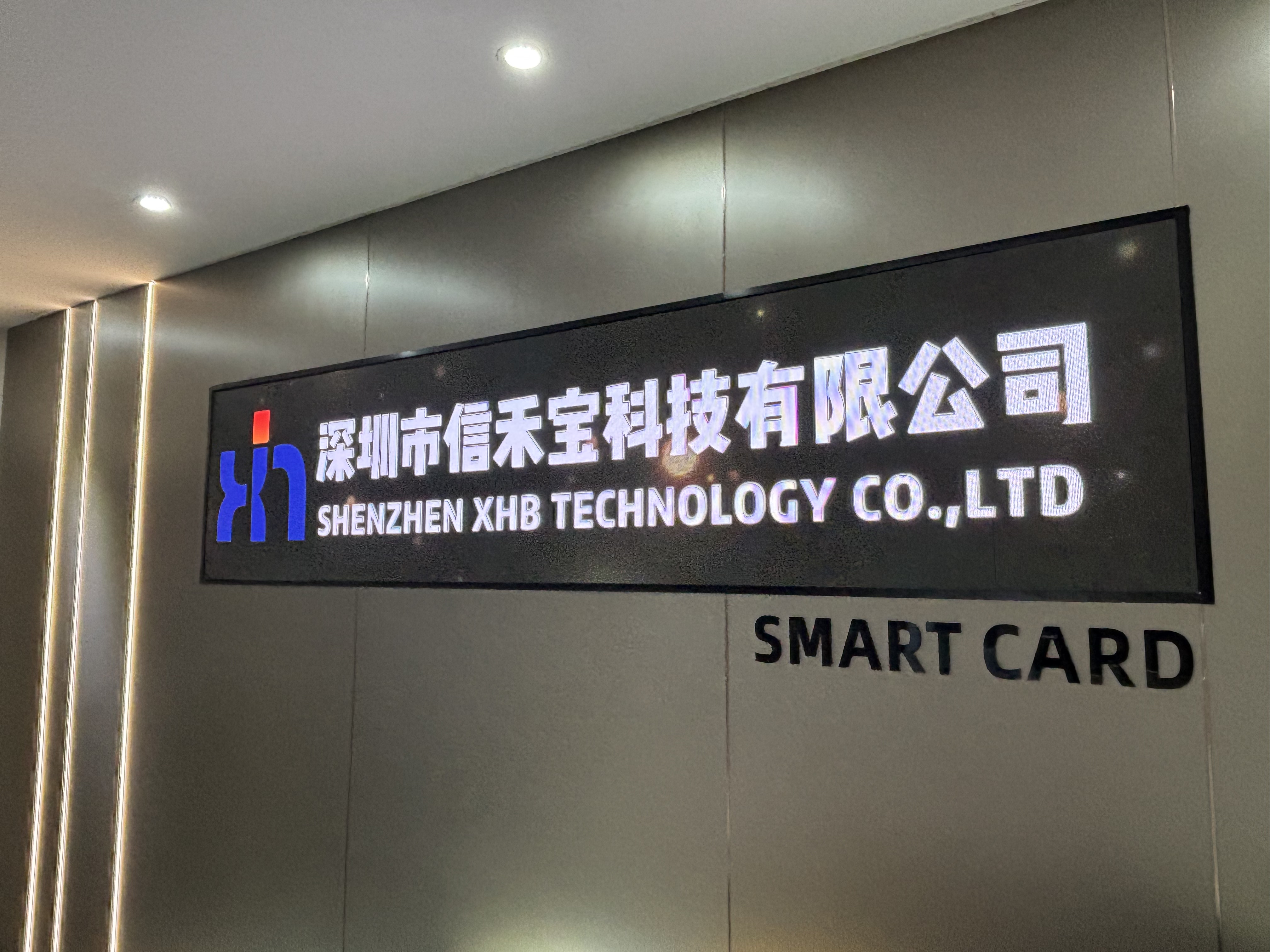
XINHEBAO provides customized card manufacturing solutions for businesses, distributors, card suppliers, and brand owners.
Our custom metal card solutions support different materials, sizes, thicknesses, printing methods, and surface treatments.
Key customization options include:
Stainless Steel, Aluminum, and Copper Materials
Standard CR80 and Customized Card Sizes
0.3–0.5 mm Typical Thickness Options
UV Printing and Silk Screen Printing
Laser Engraving and Personalized Numbering
Brushed, Matte, Glossy, and Mirror Finishes
Custom Logos, QR Codes, and Barcodes
Selected RFID/NFC Card Structures
OEM and ODM Manufacturing Services
Whether you need blank metal cards for further processing or fully customized metal business cards and membership cards, XINHEBAO can help develop a suitable solution according to your project requirements.
Conclusion
Custom metal cards are more than just alternatives to traditional plastic cards. They combine distinctive materials, advanced manufacturing processes, and flexible customization to create premium identification and branding products.
From stainless steel business cards to aluminum membership cards and specially designed RFID/NFC metal cards, different solutions can meet the needs of various industries.
When selecting a metal card manufacturer, it is important to consider material quality, manufacturing capabilities, customization options, and functional requirements.
Looking for a reliable custom metal card manufacturer?
Contact XINHEBAO to discuss your project requirements and explore customized metal card solutions for your business.
Website: https://www.szxhb.com/