




-
XHB-INLAY-DRY
-
XHB
-
XHB
-
Inlay/ Prelam
Frequency
Size
Custom RFID Dry Inlay Sheet Manufacturer for Smart Tags, Cards & Anti-Counterfeiting Solutions
XINHEBAO specializes in manufacturing customized RFID dry inlays with HF, NFC and UHF technologies for smart cards, RFID labels, product authentication, logistics tracking and embedded RFID applications.
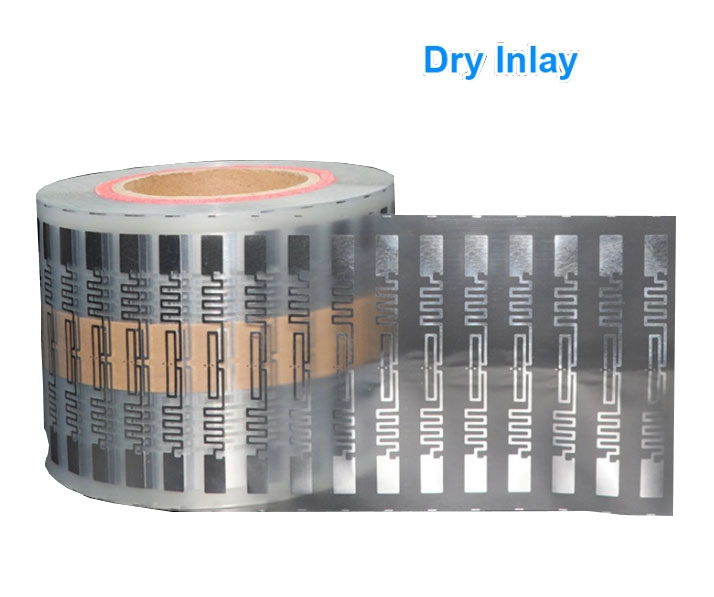
The dry inlay consists of an RFID chip and antenna mounted on a PET substrate without adhesive backing. It is specially designed for lamination, embedding and conversion into RFID cards, smart labels, security tags and customized RFID products.
With advanced antenna design technology and strict quality inspection procedures, our RFID dry inlays provide stable performance, excellent durability and flexible customization options.
Customized RFID Dry Inlay Sheet
XINHEBAO RFID Dry Inlay Sheet is a high-performance RFID component designed for manufacturers requiring reliable and flexible RFID integration solutions.
The dry inlay consists of an RFID chip and antenna mounted on a PET substrate without adhesive backing. It is specially designed for lamination, embedding and conversion into RFID cards, smart labels, security tags and customized RFID products.
With advanced antenna design technology and strict quality inspection procedures, our RFID dry inlays provide stable performance, excellent durability and flexible customization options.
What is RFID Dry Inlay?
RFID Dry Inlay is a core RFID component consisting of an RFID chip and antenna mounted on a PET substrate without adhesive backing. Unlike wet inlays, dry inlays do not include adhesive layers or release liners, making them ideal for OEM manufacturers who need to laminate, convert, or embed RFID technology into different products.
With excellent stability, flexibility, and reliable RF performance, RFID dry inlays are widely used for manufacturing smart cards, RFID labels, NFC tags, access control cards, retail tags, logistics labels, and intelligent packaging solutions.
Our RFID dry inlay consists of an RFID antenna and chip (chip package + antenna), without any adhesive backing. It is supplied as a “bare inlay” on a carrier (film or sheet), ready for further conversion, lamination or embedding into cards, labels, or other products.
This design makes dry inlays ideal for embedding into PVC cards, membership cards, access cards, custom smart cards, or for custom tag applications where adhesive is not desired or where the tag will be encapsulated within another material.

Why Choose RFID Dry Inlay?
RFID dry inlays provide manufacturers with greater flexibility compared with traditional RFID labels.
Adhesive-Free Structure
Without adhesive layers, dry inlays are easier to integrate into PVC cards, PET cards, PC cards and other embedded RFID products.
Flexible Customization
Customers can customize:
Chip type
Antenna design
Size
Frequency
Memory capacity
Packaging format
Cost-Effective for Mass Production
Dry inlays are ideal for large-volume RFID manufacturing projects requiring stable quality and competitive cost.
Difference Between Dry Inlay, Wet Inlay and Label
Dry Inlay: Antenna + chip on a substrate without adhesive or face material.
Wet Inlay: Dry inlay with an adhesive backing for easy application.
RFID Label: A complete solution including a wet inlay embedded in a printable label face.
Dry inlays offer the greatest flexibility for manufacturers and are cost-effective for large-scale production.

Comparison | Dry Inlay | Wet Inlay | Finished RFID Label |
|---|---|---|---|
Core Construction | Chip and antenna on a carrier | Dry inlay converted with adhesive and release liner | Wet inlay plus printable face stock, final adhesive and die-cut construction |
Adhesive Backing | Not included as the final self-adhesive product | Included | Included and selected for the target application surface |
Printable Face | Not included unless added during further conversion | Usually requires a face material for final printing | Paper, PET, PP or another approved printable face stock |
Typical Use | Card lamination, product embedding, encapsulation and custom converting | Label converting or compatible direct application | Ready for printing, encoding and attachment to the final item |
Protection Level | Depends on the material in which it is embedded | Depends on carrier, adhesive and further conversion | Defined by the complete face stock, coating, adhesive, lamination and edge design |
Typical Buyer | Card maker, tag manufacturer or product integrator | Label converter or RFID integrator | Brand, retailer, logistics operator or end-use program |
Comparison: RFID Dry Inlay vs Traditional Barcodes
Why Choose XINHEBAO RFID Dry Inlay?
Professional RFID Manufacturing Capability
XINHEBAO provides complete RFID solutions including RFID inlays, tags, cards and customized RFID products.
OEM & ODM Customization
We support:
✔ Custom antenna design
✔ Custom chip selection
✔ Custom size
✔ Custom frequency
✔ Custom packaging
Strict Quality Control
Each RFID dry inlay is tested for:
Chip performance
Antenna connection
Reading stability
Appearance quality
Global B2B Supply Experience
We support distributors, RFID card manufacturers and solution providers worldwide.
Applications of RFID Dry Inlay Sheet
RFID Smart Cards
Used for:
Access control cards
Membership cards
Employee ID cards
Campus cards
Product Anti-Counterfeiting
RFID dry inlays help brands create secure authentication systems for:
Luxury products
Electronics
Pharmaceuticals
Cosmetics
Logistics & Asset Tracking
Suitable for:
Warehouse management
Inventory tracking
Supply chain identification
Smart Packaging
Integrated into:
Product labels
Packaging materials
Intelligent tags
Key Features of RFID Dry Inlay
1. Adhesive-Free Design
RFID dry inlays are supplied without glue or release paper, providing greater flexibility for secondary processing, lamination, and custom RFID product manufacturing.
2. Wide Frequency Options
Available in multiple RFID frequency ranges:
LF 125kHz
HF 13.56MHz NFC / RFID
UHF 860-960MHz
Supporting different RFID applications including access control, smart cards, inventory management, and supply chain tracking.
3. Excellent RF Performance
High-precision antenna design ensures stable read/write performance and reliable communication between RFID chips and readers.
4. Flexible Customization
We provide customized solutions including:
Chip selection
Antenna design
Size customization
Layout customization
Roll or sheet format
Encoding and data programming options
FAQ
Q: What is a “dry inlay”?
A: A dry inlay includes only the RFID antenna and chip (on a substrate), without any adhesive backing.
Q: What frequency / protocol do you support?
A: UHF 860–960 MHz, EPC Global Class 1 Gen 2 (ISO 18000-6C) as standard.
Q: Can I embed the dry inlay into PVC cards or other material products?
A: Yes. That’s one of the main advantages of dry inlay.
Q: Can you customize size, antenna shape, chip type or memory, etc.?
A: Yes. We offer flexible customization.
Q: How reliable is the quality of your dry inlays?
A: We perform 100% full inspection.
Q: In what format will you deliver the inlays?
A: We can supply in roll or sheet format.
Q: What applications are especially suitable for dry inlays?
A: Dry inlays are ideal for smart cards, embedded tags.

Ordering & Samples
Ready to start your project? Contact us to request samples or discuss. Let us help you create smart cards with precision, reliability, and professional quality.
